%20Square%20Ad-01.jpg&w=640&q=75)
%20Square%20Ad%20-02.jpg&w=640&q=75)
in focus
As experiences eclipse ownership, Bangladesh’s economy is quietly being reshaped by vibes, memories, and moments.


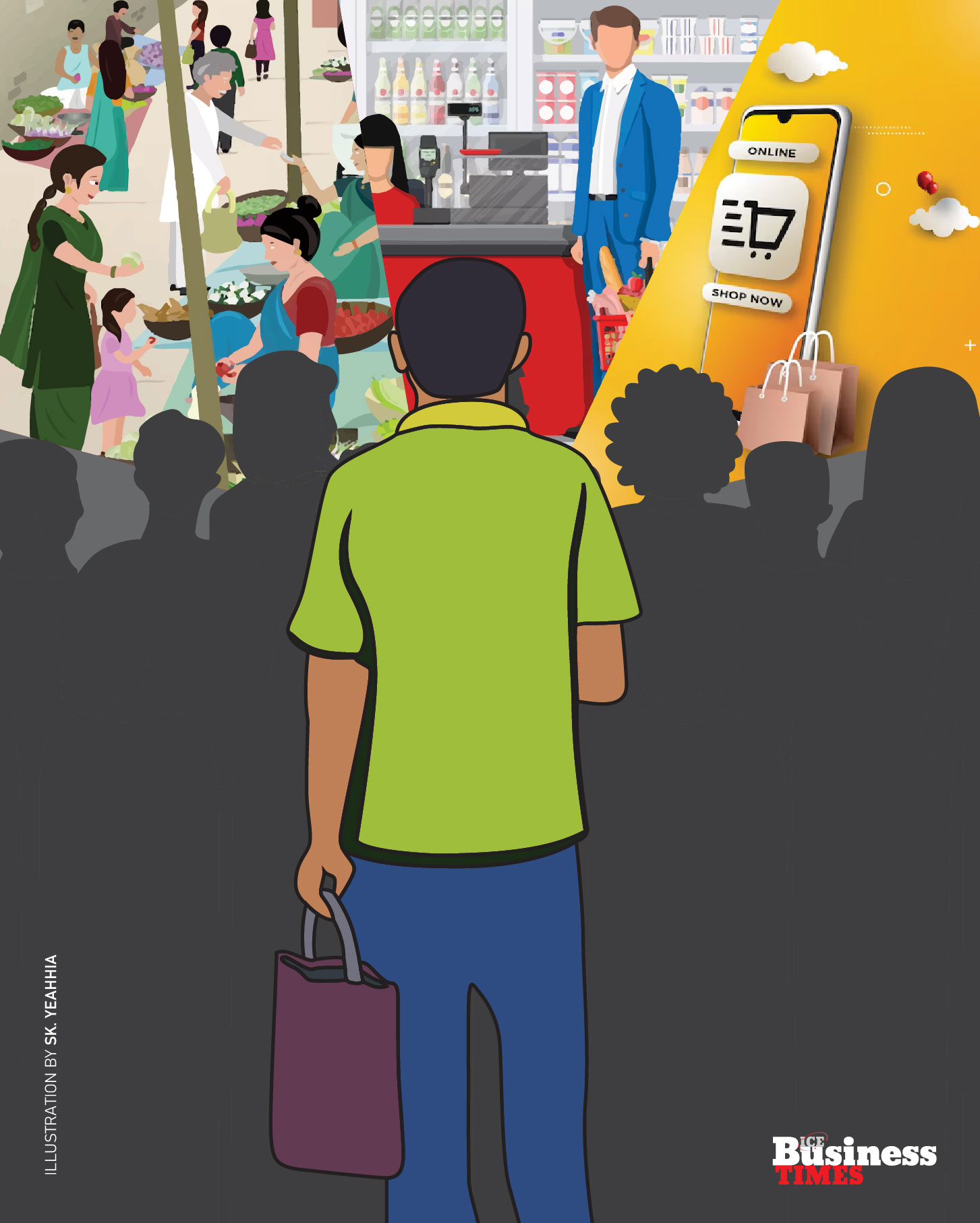
Illustrated By sk. yeahhia
1 June, 2025
Most weekends, I find myself navigating a familiar loop of urban indulgence: a browse through Aarong for a touch of heritage, a cheerful detour into MINISO, and maybe a KFC bucket shared with friends. Coffee? North End for calm, Tabaaq for buzz. Groceries? Agora for speed, Unimart for quality, and Swapno for convenience. It looks like routine consumption, but is it really just about the products?
Recently, it’s been all about the ‘vibe’. Aarong’s warm lighting, Swapno’s playlists, and North End’s Instagrammable latte art. These aren’t just shops; they’re stages for stories told in reels and posts. I go not just to buy but to unwind, be seen, and share. And I’m not alone.
On a recent Dhaka weekend, thousands attended an indoor Eid festival at a luxury hotel, browsing artisan stalls, sampling fusion street food, and stepping into a Van Gogh 3D show. Across town, a four-day arts fair featured bamboo weaving workshops, folk music, and more than 100 local vendors.
Scenes like these capture a shift unfolding across Dhaka, Chattogram, and beyond, echoing global cities like Jakarta and Mumbai. A new generation of Bangladeshis is prioritising experience over ownership. This marks the rise of the experience economy, where value lies not in what we own but in what we feel.
Understanding the demographic and digital drivers of this shift is crucial, as is recognising how products themselves are now designed as experiences. But perhaps the most critical insight lies in how Bangladeshi businesses, from retail to recreation, are responding. This shift carries significant implications for the country’s economic future. And it prompts a deeper question for us as consumers: What are we really buying when we pay for a vibe, a moment, or a memory?

Bangladesh’s experience economy is powered by youth, income growth, and digital life. With a median age of 27.9, it has one of the youngest populations in Asia. Over 60 million Bangladeshis are on social media, feeding a desire to buy not for utility, but for memory and shareability.
A Global Trend with Local Roots
The term ‘experience economy’ was first coined by B. Joseph Pine II and James H. Gilmore in their 1998 Harvard Business Review article and expanded in their 1999 book The Experience Economy. They described four stages of economic evolution: commodities, goods, services, and finally, experiences. In this final stage, businesses no longer just sell products; they stage immersive events that create emotional value.
Pine and Gilmore famously illustrated the concept through children’s birthdays. Mothers used to bake cakes from scratch (commodity); later, they bought boxed mixes (goods); later still, they ordered cakes from bakeries (services). Today, parents increasingly pay for themed party packages, spending sizeable sums for a themed celebration that engages children and adults alike, where cake, decoration, entertainment, and ambience are bundled into an orchestrated experience. The product becomes secondary; the memory is the value.
Globally, Apple designs stores as stages for product trials and workshops. Airbnb sells experiences alongside stays, like cooking lessons or hiking trips. Music festivals like Coachella in the United States sell a curated blend of performance, fashion, art, and digital presence. McKinsey reports that experiential spending is growing four times faster than spending on goods, while analysts project a global market size of USD 17 trillion by 2030.
Psychologists agree, too, that shared experiences such as travel, workshops, or concerts create longer-lasting satisfaction than material purchases. In Asia, malls in India, Vietnam, and Indonesia have become lifestyle destinations offering co-working spaces, artisan markets, and immersive play zones. Bangladesh is embracing the model but with its own flavour. Shopping complexes like Bashundhara City, Shimanto Square, SKS Tower, and Tokyo Square now host cinemas, cafés, play zones, and wellness outlets. From immersive exhibitions to rooftop music nights, experiences are no longer add-ons; they are the draw.
Demographic Shifts Fueling Experience Spending
Bangladesh’s experience economy is powered by youth, income growth, and digital life. With a median age of 27.9, it has one of the youngest populations in Asia. Over 60 million Bangladeshis are on social media, feeding a desire to buy not for utility, but for memory and shareability.
Consumption has shifted. Lifestyle upgrades now include boutique café visits, boutique fitness sessions, and curated weekend escapes - once elite, now aspirational staples. Cultural festivals like Pohela Boishakh and Eid shopping have evolved into immersive lifestyle events. Women are leading this evolution, from launching curated fashion and beauty pop-ups to supporting women-only gyms and wellness cafés. Platforms like Foodpanda and Chaldal promote convenience as a lifestyle - fast, gamified, urban.
These trends extend beyond Dhaka into Rajshahi, Sylhet, and Khulna. The experience economy signals more than just changing consumer habits; it reflects evolving urban life and a changing definition of aspiration.
Social Media, FOMO, and the Creator Economy
Social media accelerates this shift. Platforms like Facebook, Instagram, TikTok, and YouTube are central to how young Bangladeshis consume and share life. Whether it’s selfies in a café or reels from music nights, experiences now serve as social currency. As SRS Merchandising, a leading US-based retail merchandising company, put it, “Millennials like to share their every movement online, painting a picture of an adventurous, experience-driven life.”
Fear of Missing Out (FOMO) is a powerful motivator. Globally, 69% of millennials experience FOMO, and 60% make experience-based purchases because of it. In Bangladesh, a café or boutique hotel opening triggers a wave of check-ins, reels, and influencer visits.
“Instagrammable” is now a design strategy consisting of neon signs, photo corners, and latte art. Cafés are becoming lifestyle brands, and even tea is now stylised to offer an experience.
The creator economy feeds this further. Food vloggers showcase Dhaka’s street eats; hiking groups share trails in Sylhet and Bandarban. Local entrepreneurs now turn lived moments into offerings. A virtuous cycle emerges; content creates demand, which creates more content, thus sustaining the experience economy.
How Bangladeshi Businesses Are Responding
Businesses across Bangladesh are quickly adapting to meet the growing demand for experiences. In retail, food & beverage, wellness, tourism, and events, the strategy has shifted from selling products to curating emotional engagements.
Malls like Bashundhara City and Jamuna Future Park mix shopping with events like concerts, gaming zones, and pop-ups. Aarong's flagship stores host craft demos, fusion cafés, and cultural storytelling. Pop-up markets like Dhaka Makers blend artisan stalls with music and workshops. These spaces are no longer retail zones alone; they are destinations for lifestyle immersion, social gatherings, and cultural discovery.
Café culture in Dhanmondi, Banani, and Gulshan is booming. Interiors are curated for photos, and menus are designed for reels. Many cafés host open mics or film nights. Freelancers and students treat these spaces as hybrid zones of work, community, and content. Fast food chains, too, are evolving with thematic décor and digital loyalty programmes aimed at Gen Z.
Urban youth now invest in wellness. Yoga studios, day spas, and boutique fitness classes are growing. GIZ-backed Women’s Cafés offer safe leisure spaces. Affluent consumers are exploring wellness retreats in Sajek, Bandarban, and the Sundarbans. Health-conscious lifestyle branding is on the rise, from organic juice bars to mental wellness pop-ups.
Live event culture is surging. Dhaka Lit Fest, Bengal Classical Music Festival, and youth-focused festivals like Let’s Vibe draw thousands. These festivals blend art, shopping, music, and food. Brands, startups, and influencers work together to create immersive event-marketing ecosystems. Even niche festivals such as poetry nights, digital art shows, or coding marathons are seeing youth-led participation and sponsorship.

The experience economy offers Bangladesh more than business opportunities. It signals security, a sign that people now feel safe enough to seek joy. If nurtured well, this could mean a richer, more inclusive, and creative economy.
Strategic Implications & Economic Growth
This isn’t a marketing trend, it’s an economic shift. As Pine and Gilmore put it, "When you think about experiences, you're designing time." For Bangladeshi businesses, designing meaningful time is a new competitive edge.
Tourism, retail, and entertainment are poised to lead growth. Bangladesh's travel and tourism sector is expected to grow 9.61% annually between 2025 and 2029, reaching a market volume of USD 3.46 billion by 2029. Revenue is projected to hit USD 2.4 billion by that year, too.
Heritage trails, eco-tourism, and culture-led travel can diversify Bangladesh’s economy beyond garments. Startups can localise storytelling. Experiential branding could uplift artisanal communities, promote sustainable models, and generate youth employment. Businesses that integrate inclusive, localised, and sustainable practices in experience design will find both market success and social resonance.
Still, challenges exist like infrastructure gaps, limited digital booking systems, and environmental risks like over-tourism and waste. Without inclusive policies, the experience economy might skew urban and elite. There is also a risk of burnout. Constant chasing of the next curated moment may result in a superficial culture. Mindful experiences that connect deeper values like sustainability, wellness, and identity will have enduring value.
Toward an Experiential Bangladesh
From coffeehouses in Dhaka to beaches in Cox’s Bazar, Bangladesh’s shift is evident. The country mirrors its global neighbours. In Vietnam, 42% of consumers increased spending on vacations and events in 2024, the highest in ASEAN. In India, millennials now spend more than USD 6,000 annually on travel.
Bangladesh may be behind in per capita terms, but the trajectory is clear. The country's young, connected, and aspirational middle class are embracing new norms. Whether it’s banks hosting wellness fairs or NGOs running storytelling trails, the question is no longer just “What are we selling?” but “What are we making people feel?”
Despite inflation or downturn risks, the desire for joy, connection, and memory will remain. The concerts, retreats, and shared meals will be remembered more than the things we owned.
The experience economy offers Bangladesh more than business opportunities. It signals security, a sign that people now feel safe enough to seek joy. If nurtured well, this could mean a richer, more inclusive, and creative economy. For policymakers, this signals the need to integrate experience-based development, including public spaces, cultural hubs, and digital platforms, into future growth planning.
Perhaps the ultimate promise of this shift is simple but profound. Future generations won’t remember what we bought but what we shared - the stories, the laughter, and the lives well-lived.

%20Square%20Ad%20-10.jpg&w=640&q=75)
%20Square%20Ad%20-11.jpg&w=640&q=75)
%20Horizental%20AD-01.jpg&w=3840&q=75)
