%20Square%20Ad-01.jpg&w=640&q=75)
%20Square%20Ad%20-02.jpg&w=640&q=75)
The Foundation
A cautionary overview of the potential downfalls of AI chatbots for small businesses.

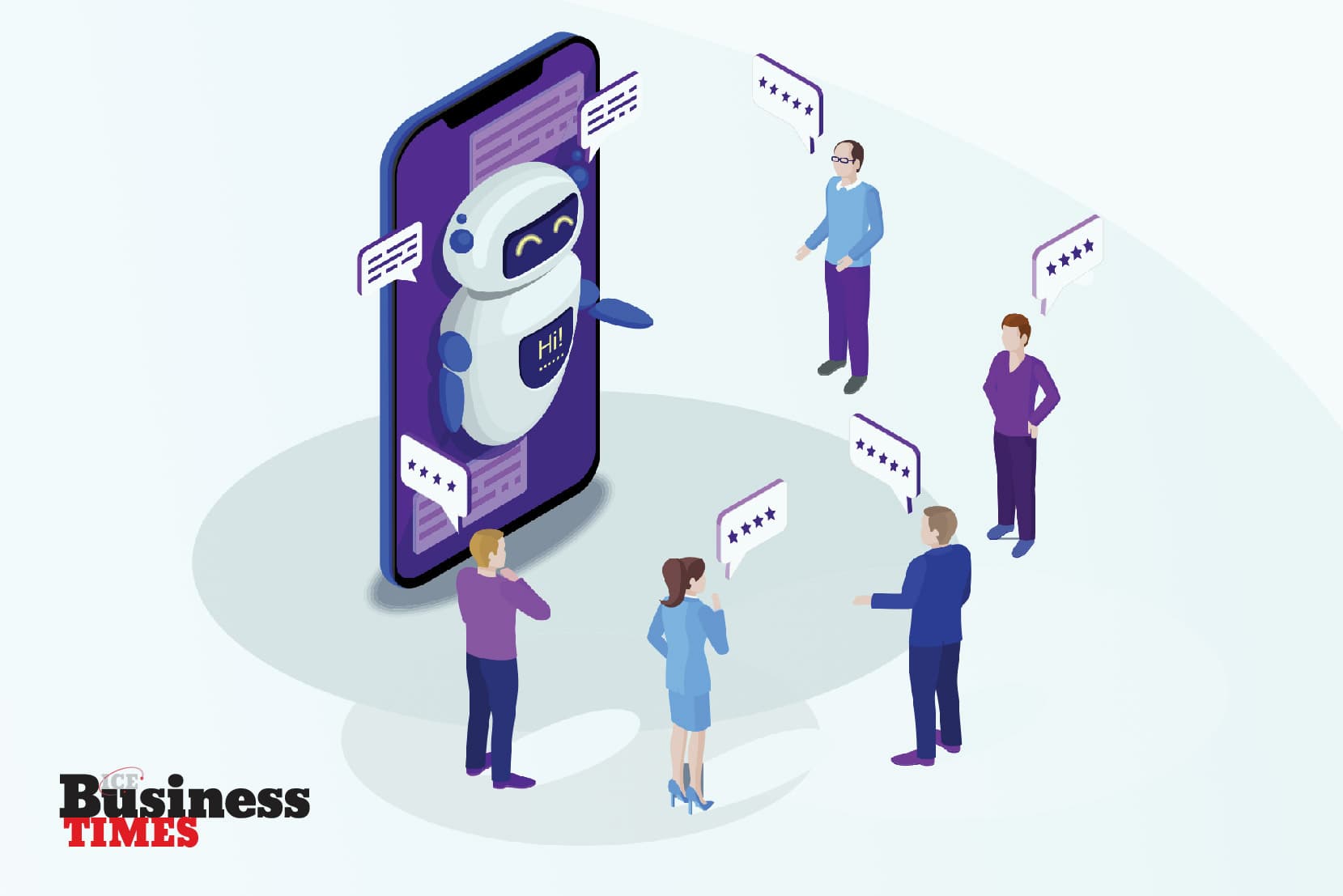
Illustrated By sk. yeahhia
19 June, 2025
Chatbots were once hailed as a game-changing way to provide contemporary customer service. By promising round-the-clock availability, fewer staffing requirements, and smooth automation, they appeared to give startups and small businesses a quick route to professionalism and growth. However, that vision has begun to erode. More often than not, users are blocked by generic responses, looped into ambiguous suggestions, or lost in scripted conversations. The same tools meant to foster connection are now undermining trust.
The problem is not only that chatbots make mistakes but also that they do so with unwavering confidence and without any awareness of the emotional context. They are therefore especially unsuitable for the early phases of a company, when each consumer encounter can shape public opinion and brand loyalty. The fallout can often feel personal when a chatbot misinterprets tone, offers insufficient assistance, or just fails to escalate a concern. For a small business, that broken trust can be irreparable.
When Automation Backfires
Recent moves by established companies to roll back chatbot strategies offer a clear signal to smaller players. The Swedish fintech company Klarna aimed to automate 75% of its interactions by replacing a large portion of its customer service staff with AI bots. Initially praised for the shift, the company soon found itself overwhelmed by customer complaints. Ultimately, they began rehiring human agents. A similar scenario played out at IBM, which had launched an AI-driven HR assistant to streamline internal queries. However, the tool's shortcomings were made clear when it was unable to process complex, case-specific requests. These incidents highlight a developing realisation that, in situations requiring complexity and attention to detail, automation cannot take the place of human interaction.
A System Failing Its Purpose
The increasing reliance on AI service roles has brought about a new type of negative experience that is alienating customers. Many users now approach service interactions with low expectations, bracing for robotic replies and fruitless exchanges. Chatbots frequently fail to meet customers' needs in crucial situations where they require immediate action, clarification, or assurance. The emotional intelligence required to navigate sensitive or urgent issues remains out of reach. The purpose of service systems is to help people, not to irritate them. When companies put efficiency ahead of empathy, they run the risk of undermining the very relationships they seek to build.
Startups are particularly susceptible to the illusion of chatbot efficiency. In theory, lean teams with tight budgets would benefit greatly from automating customer service. But beneath the surface, the reality is more complicated.
The Efficiency Illusion
Startups are particularly susceptible to the illusion of chatbot efficiency. In theory, lean teams with tight budgets would benefit greatly from automating customer service. But beneath the surface, the reality is more complicated. Chatbots require frequent maintenance, retraining, and oversight. Furthermore, providing real, human support from the beginning is far less expensive than the recovery process after they fail, both in terms of resolving the problem and winning back the trust of the client. Moreover, early-stage companies depend on word-of-mouth, customer loyalty, and brand goodwill. A poorly handled support query can ruin months of progress by creating a negative first impression. A chatbot may react right away, but if it is inaccurate, the harm has already been done.
Rebuilding the Support Stack
Startups should rethink the role of automation in their customer experience strategies. Automation can be used more selectively by businesses rather than entrusting AI with entire conversations. Rule-based bots can assist with routing enquiries, confirming orders, or providing basic information. However, it is preferable to employ real people for anything that needs context, discretion, or a human ear. Even a simple, clearly written FAQ page or a well-monitored email line can outperform a flashy chatbot.
People Over Promises
The race to automate has outpaced our understanding of what customers actually value. Startups, in particular, should pause before investing in chatbot infrastructure that promises more than it delivers. While AI will continue to evolve, its current state still lacks the nuance, intuition, and empathy that real human interactions provide. In a time when customers are becoming more tech-savvy but emotionally spent, being able to provide genuine, one-on-one assistance turns into a real competitive advantage. Sometimes, improving listening skills is a better strategy for startups than increasing automation. At its core, service is more than just problem-solving. It’s about making people feel seen, heard, and valued.

%20Square%20Ad%20-10.jpg&w=640&q=75)
%20Square%20Ad%20-11.jpg&w=640&q=75)
%20Horizental%20AD-01.jpg&w=3840&q=75)
