%20Square%20Ad-01.jpg&w=640&q=75)
%20Square%20Ad%20-02.jpg&w=640&q=75)
Skill Set
Explore the complex nexus of policy, science and sustainability.

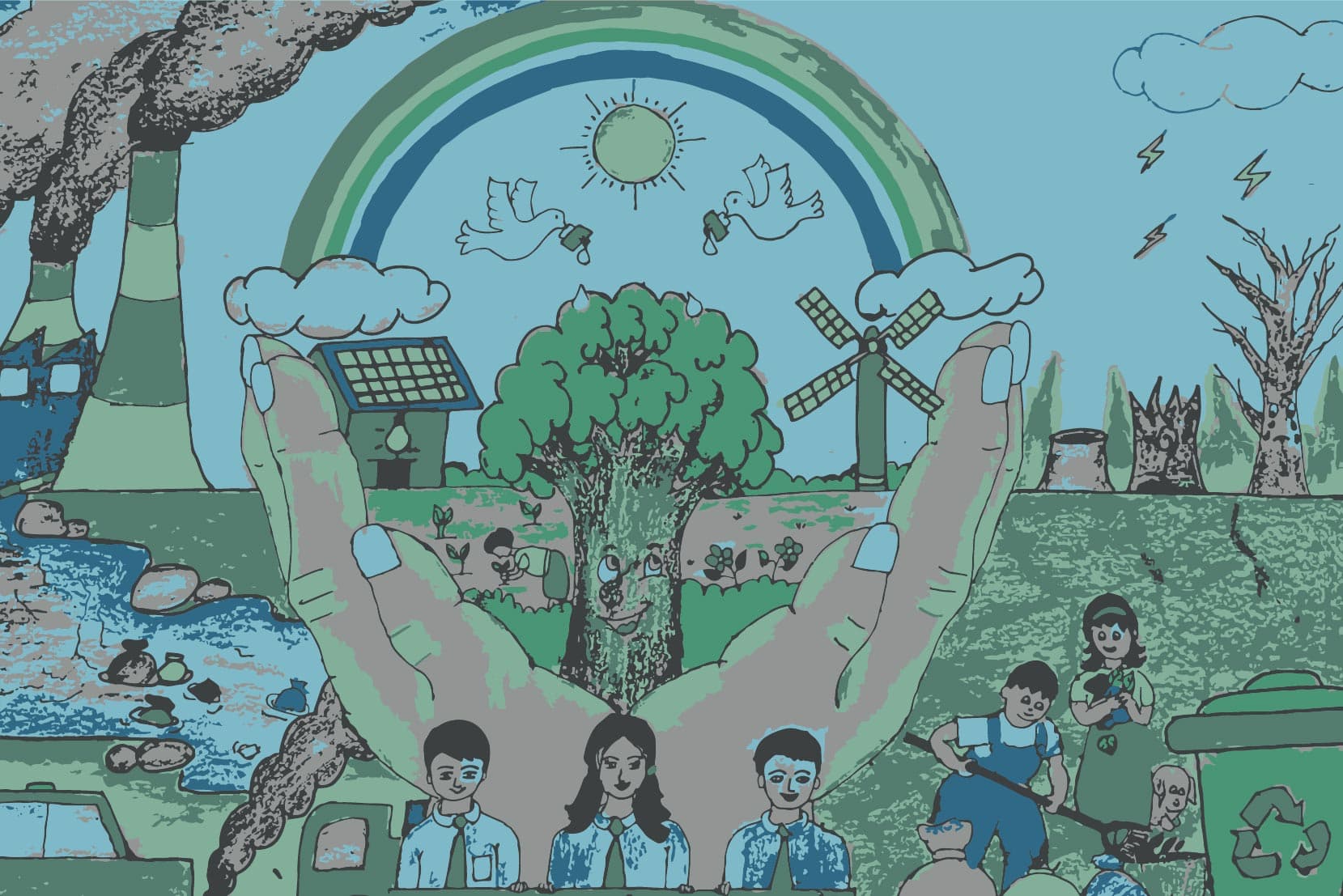
Illustrated By sk. yeahhia
4 April, 2025
In a world facing proliferating climate issues, resource depletion, and environmental degradation, the need for effective environmental management has never been greater. This course, Global Environmental Management by the Technical University of Denmark (DTU), provides a comprehensive overview of environmental challenges and focuses on intersections of policy, science, and industry, exploring critical topics such as climate resilience, pollution control, resource conservation, and emphasising sustainable solutions for a rapidly changing planet. Through practical applications, expert insights, and real-world case studies, this course offers a thorough understanding of regulatory frameworks, corporate initiatives, technological advancements, environmental systems and the resources required to bring about significant change on a local and global scale.
Module 01 : Global Trends
The module offers a comprehensive introduction to the complexities of global environmental trends by examining how cities expand, how housing and transport affect sustainability, and what steps can be taken to address climate change. During the first week, participants will examine major global trends influencing our environment and quality of life. They will explore the Sustainable Development Goals (SDGs), urban growth, transportation, housing, and climate action strategies through talks and videos hosted by experts.
Videos: 7
Assignments: 1
Peer Reviews: 1
Module 02 : Environmental Management
This module explores different approaches used across different regions, shaped by cultural, historical, and geographical factors. Key topics covered in the module include waste management, stakeholder engagement, circular economy principles, and climate adaptation. Through case studies from Greenland, China, and Denmark, learners gain insight into how diverse environmental challenges are addressed globally, highlighting the varying strategies used to manage resources and mitigate climate risks.
Videos: 9
Assignments: 1
Peer Reviews: None
Module 03 :Utility Management
This module examines different regulatory approaches and management systems that ensure sustainable resource use and environmental protection. To illustrate various approaches to solving water-related issues, learners will examine case studies from Denmark's rural water supply, Copenhagen's stormwater management, and Nairobi's integrated urban water management. The module also explores air pollution sources and solid waste management phases and their effects on public health, offering an overview of policies in action.
Videos: 8
Assignments: 1
Peer Reviews: 1
Module 04 : Technologies for the Built Environment
This module examines the selection and application of various technologies in solid waste handling, urban water supply, and stormwater management, weighing their practicality against their effects on the environment. Particular attention is paid to Greenland, where distinct environmental circumstances influence methods for mining, waste management, and water supply. Additionally, learners will learn about wastewater treatment techniques, integrated urban drainage systems, and rural environmental technologies, showcasing creative approaches to creating a more sustainable future.
Videos: 10
Assignment: 1
Peer Reviews: None
Module 05 : Other Technologies
This module explores environmental technologies beyond conventional urban water systems, focusing on sustainable approaches to soil and water management. It covers integrated water resource management tactics, nature-based wastewater treatment methods for rural areas, and techniques for groundwater exploration and protection. Furthermore, experts discuss key aspects such as making groundwater more visible, safeguarding its quality, effective soil management techniques, and regional approaches to water sustainability.
Videos: 5
Assignments: 1
Peer Reviews: None
COURSE OVERVIEW
Platform: Coursera
Duration: 13 hours
Difficulty: Beginner
Flexibility: Self-paced

%20Square%20Ad%20-10.jpg&w=640&q=75)
%20Square%20Ad%20-11.jpg&w=640&q=75)
%20Horizental%20AD-01.jpg&w=3840&q=75)
