%20Square%20Ad-01.jpg&w=640&q=75)
%20Square%20Ad%20-02.jpg&w=640&q=75)
Tech
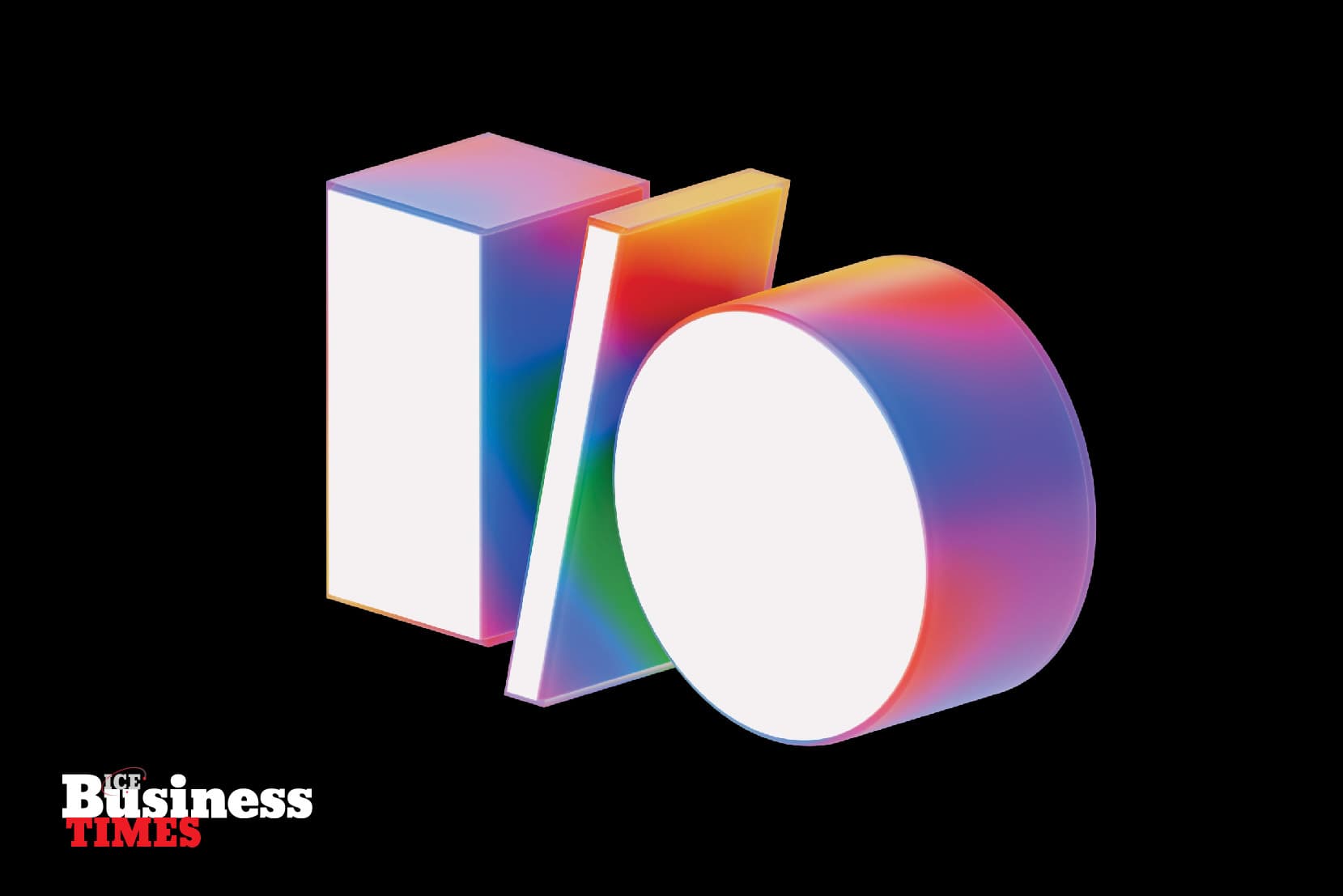
Highlights from Google I/O 2025, the tech company’s biggest developer conference of the year.

Photographs collected
16 June, 2025
Google’s I/O 2025, Google’s biggest developer conference of the year, felt like a peek into a sci-fi blockbuster. Imagine waking up in a world where your glasses answer your questions, the AI in your browser writes your emails, and your virtual reality headset transports you to a stadium while you sip morning coffee. That was the vibe at Google I/O 2025: a rapid-fire showcase of hardware and software built around Gemini, Google’s all-knowing AI.
Gemini Ultra
Google raised eyebrows by unveiling Gemini Ultra, a US-only, USD 249.99/month subscription that claims to deliver the highest level of access to Google’s AI ecosystem. Subscribers get Veo 3 (video generation with built-in sound effects and dialogue), Flow (AI-powered video editing), and Deep Think, an advanced reasoning mode in Gemini 2.5 Pro that juggles multiple ‘answers’ before settling on the best one. Ultra also boosts NotebookLM and Whisk usage limits, unlocks Gemini in Chrome, throws in YouTube Premium, and offers a hefty 30 TB across Drive, Photos, and Gmail.
Deep Think in Gemini 2.5 Pro
Think of Deep Think as Gemini’s serious face. It’s a new mode for the Gemini 2.5 Pro model that lets it weigh different possibilities, akin to giving it a mini debate club in its neural networks. Google didn’t spill all the technical beans, but it hinted that Deep Think will shine on benchmarks demanding multi-step reasoning. Initially, it’s available only to trusted testers via the Gemini API; a wider rollout is on hold pending extra safety checks.

Google’s AI push forces rivals to adapt quickly. Apple’s privacy-focused, on-device AI faces Google’s cloud-powered Gemini and upcoming Android XR.
Imagen 4 AI Image Generator
Imagen 4 is Google’s latest image model, and it’s both faster and more detailed. It can render fine textures like fabric weaves or water droplets in photorealistic or abstract styles, up to 2K resolution. Google promises an even speedier variant soon, potentially up to 10× faster than Imagen 3. Imagen 4, combined with Veo 3, fuels Flow, Google’s new AI video tool for aspiring filmmakers.
Gemini App Updates & Gemini Live
The Gemini app now boasts over 400 million monthly active users. Users can now talk to Gemini while it ‘sees’ the environment, and soon it will also fetch directions from Maps, create Calendar events, and build to-do lists in Tasks. Meanwhile, Deep Research (Gemini’s report-generator) is levelling up. Users can upload private PDFs and images, and Gemini will comb through them to create comprehensive research briefs.
Stitch & Jules for Developers
For app builders, Google introduced Stitch, an AI that crafts front-end UI elements and code. Prompt Stitch with a rough sketch or a few words, and it spits out HTML and CSS for web or mobile interfaces. Also, Jules, Google’s code-fixing AI agent, expands its reach, helping developers troubleshoot, generate pull requests, and clear backlog items more efficiently.
Project Mariner
Project Mariner is an experimental AI chatbot that browses websites, fills forms, and completes tasks on your behalf. At I/O, Google announced that Mariner can now juggle nearly a dozen tasks at once, making it far more capable than its earlier prototype. Rollout begins this summer.
Project Astra
Project Astra is Google’s fast-and-furious multimodal AI demo that ties together camera vision, real-time chat, and screen sharing. Beyond powering Gemini Live, Astra technology will underpin new features in Search, the Gemini app, and third-party products. The company teased Astra-powered smart glasses built with partners like Samsung and Warby Parker, though no launch date was disclosed.
AI Mode in Google Search
AI Mode transforms Search into a conversational AI experience. Instead of scanning links, users can pose complex, multi-part questions directly to Gemini. AI Mode integrates sports and finance data, supports 'try it on' apparel previews, and lives in a dedicated tab on the search results page. It’s rolling out this week in the US.
Gmail & AI Workspace Enhancements
Gmail will soon introduce Personalised Smart Replies, where Gemini will scan your email and Drive files to suggest responses that sound like you. There’s also a new inbox-cleaning feature. Google Docs and Google Vids are getting AI-powered drafting, summarisation, and editing tools. For developers, Video Overviews are arriving in NotebookLM, and SynthID Detector helps verify AI-generated content. Meanwhile, Lyria RealTime, Google’s AI music engine, is now available via API, letting you generate original music within your apps.
Beam 3D Teleconferencing
Previously called Starline, Google Beam uses a six-camera array and a custom light-field display to render near-perfect 3D video calls at 60 fps. Beam tracks your head movements to create a holographic effect, and when paired with Google Meet, it offers AI-powered speech translation that preserves voice tone and expressions.
Gemini in Chrome & Gemma 3n
Google is embedding Gemini into Chrome as an AI browsing assistant. Chrome Beta/Dev/Canary users will soon see an AI sidebar that summarises articles, drafts messages, and answers questions based on multiple open tabs. Meanwhile, Gemma 3n, a lightweight model designed for phones, tablets, and laptops, enters preview, handling audio, text, images, and video queries in real time.
Wear OS 6 Upgrades
Wear OS 6 introduces a unified font for a cleaner look, dynamic theming on Pixel Watches (app colours sync with your watch face), and a fresh design reference with Figma files for developers.
Google Play Store Overhaul
For Android developers, Google Play gets smarter tools: subscription management updates, topic pages for niche interests (e.g., “K-Drama apps”), audio samples so users can preview app content, and a redesigned checkout flow for in-app purchases. Developers can also pause live app rollouts if a critical bug pops up and monitor release health more effectively.

Google I/O 2025 wasn’t just incremental updates; it was a manifesto. By embedding Gemini into headsets, browsers, and apps, Google declares AI as core, not optional.
Android Studio AI Features
Android Studio’s new lineup is all about AI assistance. Journeys, an ‘agentic AI’ feature, helps developers navigate complex tasks alongside Gemini 2.5 Pro. Enhanced ‘Crash Insights’ powered by Gemini, sifts through crash logs and suggests fixes. An ‘Agent Mode’ in Android Studio will eventually automate repetitive development tasks such as code reviews, refactoring suggestions, and even documentation.
The Android Show Highlights
Separately, at ‘The Android Show’, Google unveiled nifty phone-finding features for lost phones and items, bolstered its Advanced Protection program with device-level security tools against scams and theft, and introduced Material 3 Expressive, a new design language focused on variable fonts, dynamic colour, and playful animations.

Impact on Competitors and Consumers
Google’s AI push forces rivals to adapt quickly. Apple’s privacy-focused, on-device AI faces Google’s cloud-powered Gemini and upcoming Android XR. Microsoft must defend Office 365 as Gmail’s smart replies and Chrome AI Mode eat into productivity tools, while Project Mariner threatens to out-automate Copilot. Meta’s VR lead with Quest is challenged by an open Android XR ecosystem, and Amazon’s Alexa risks obsolescence if users prefer Mariner’s hands-free shopping. Even OpenAI, despite its LLM prowess, must counter Google’s vast distribution of Gemini in Search, Chrome, Workspace, and soon, AR glasses.
Consumers stand to gain powerful assistants that handle tasks from booking flights to crafting short films with Veo 3 and Flow, while enjoying immersive experiences in Android XR. But these perks come at a price - Gemini Ultra’s USD 249.99/month subscription, deeper data sharing, and a steeper learning curve for managing multiple AI tools and interfaces.
Google I/O 2025 wasn’t just incremental updates; it was a manifesto. By embedding Gemini into headsets, browsers, and apps, Google declares AI as core, not optional. Competitors must refine their AI strategies, and consumers will weigh convenience against cost and data trade-offs. If these innovations deliver, we’re entering an era where devices anticipate our needs and even finish our sentences. Welcome to the AI wave.

%20Square%20Ad%20-10.jpg&w=640&q=75)
%20Square%20Ad%20-11.jpg&w=640&q=75)
%20Horizental%20AD-01.jpg&w=3840&q=75)
